
Pokies Parlour Casino in Australia: What It Means
 Available in AU
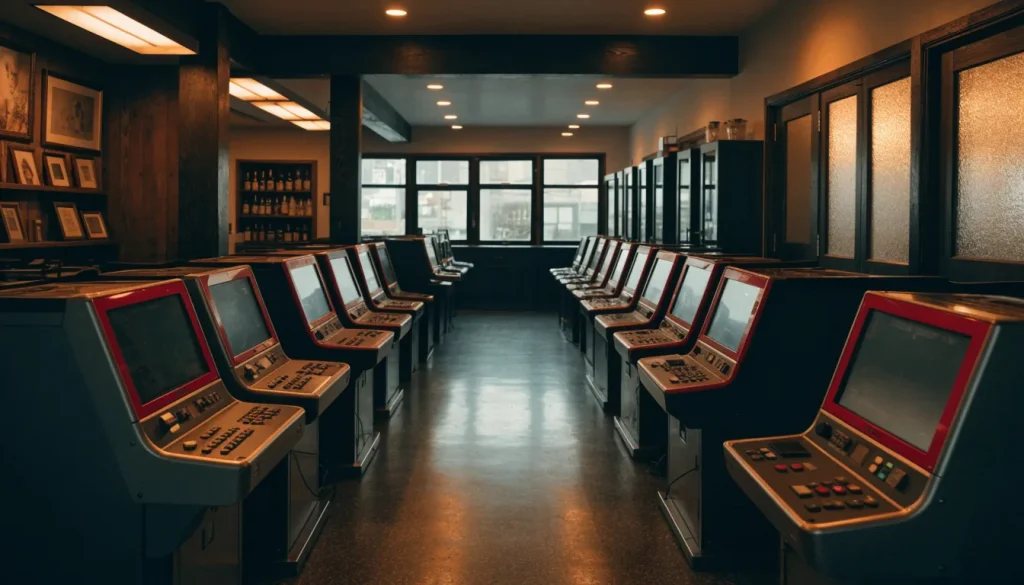
A pokies parlour is a gaming area within a physical venue; the same wording online does not establish that a business operates a licensed casino.
Table of Contents
- What a Pokies Parlour Means in Australia
- Where Casinos Operate—and What Entry Involves
- Parlour Pokies and the Scale of Casino Gaming
- Reading a Pokies Parlour Casino Review
- Online Play, Free Access and the Domain Problem
- Sign-Up Offers, Free Spins and the Fine Print
- What “VIP Parlour” Signals About Access
- Real-Money Claims and Australian Licensing
What a Pokies Parlour Means in Australia
In Australia, “pokies parlour” can describe a room or area where electronic gaming machines are available inside a physical venue. The phrase sounds like a distinct type of establishment, but it is not a reliable label for a separate national casino category. In ordinary use, “pokies” refers to gaming machines, while “parlour” suggests a dedicated space. The exact meaning depends on how the venue uses the term.
That distinction matters because a casino parlour is a place, not a website feature. A physical gaming area belongs to a venue with an address, staff and an operating licence. A page using the same words is simply presenting an online service or brand. Its use of “parlour” does not turn a website into a casino property, nor does it show that the business holds the licence required to operate a physical casino in Australia.
I have seen the word do a lot of work in promotional copy. “Parlour” can make a venue sound intimate or specialised; “casino” can suggest a broader range of facilities. Neither word, by itself, describes the property’s legal status. The practical distinction is between a real premises operating under a local jurisdiction’s casino licence and a digital destination borrowing familiar casino language. Similar branding does not make those things equivalent.
Choosing a pokies parlour-style casino in Australia means weighing the details that are actually available, such as licensing, deposit minimums and payout information. This list offers a concise reference to help you decide what to look into further.
1. Vegaz Casino
License: Curacao OGL/2024/1335/0780 · Min. deposit: EUR 20 Vegaz Casino lists a Curaçao OGL licence, number 2024/1335/0780. Its minimum deposit is EUR 20.
2. Golden Pokies
License: Curacao Golden Pokies is listed with a Curaçao licence. No other operator details are provided here.
3. LuckyVibe
License: Curacao Gaming Control Board OGL/2023/176/0095 (Hollycorn N.V.) LuckyVibe lists a Curaçao Gaming Control Board OGL licence, number 2023/176/0095, held by Hollycorn N.V.
4. 7Bit Casino
License: Curacao, operated by Dama N.V. 7Bit Casino is listed as Curaçao-licensed and operated by Dama N.V.
5. MrPacho
Payout speed: crypto 30-120 minutes, fiat 24-72 hours · Min. deposit: A$30 MrPacho lists crypto payouts at 30–120 minutes and fiat payouts at 24–72 hours. Its minimum deposit is A$30.
6. Thor Casino
License: Curacao – Antillephone N.V. (Versus Odds B.V.) · Min. deposit: EUR 20 Thor Casino lists a Curaçao licence associated with Antillephone N.V. and Versus Odds B.V. Its minimum deposit is EUR 20.
7. Rollero Casino
License: Curacao Gaming Control Board OGL/2023/176/0095 (Hollycorn N.V.) Rollero Casino lists a Curaçao Gaming Control Board OGL licence, number 2023/176/0095, held by Hollycorn N.V.
8. SpinsUp
License: Curacao Gaming Control Board OGL/2023/174/0082 (Dama N.V.) SpinsUp lists a Curaçao Gaming Control Board OGL licence, number 2023/174/0082, held by Dama N.V.
9. Wild Tokyo
License: Curacao · Payout speed: crypto 30-60 minutes, fiat 1-5 days · Min. deposit: A$10 Wild Tokyo lists a Curaçao licence. Its stated payout times are 30–60 minutes for crypto and 1–5 days for fiat, with a minimum deposit of A$10.
10. Uptown Pokies
License: Curacao (operating since 2017) · Min. deposit: A$20 Uptown Pokies is listed as Curaçao-licensed and operating since 2017. Its minimum deposit is A$20.
A physical casino is tied to a specific place and a specific licensing authority. Australia does not issue one national casino licence that covers every property. Casino regulation sits with state and territory jurisdictions, and each property operates under a licence issued by the jurisdiction where it is located. That local arrangement is the useful starting point for understanding what a casino parlour means here: the venue is part of a licensed property, rather than a free-standing concept created by its name.
The term can also be used loosely for gaming rooms in settings that are not full-scale casinos. That is one reason not to infer too much from a sign, a venue description or a search result. A room may be described as a pokies parlour without the property being a casino; conversely, a casino may have a gaming floor without using “parlour” as its official name. The wording describes an impression or a space, not necessarily the legal category of the operator.
A specialist casino review gives a time-bound count of more than twenty full-scale casinos across Australia’s eight states. That kind of figure should be read as an inventory assembled at a particular time, not as a permanent definition of the market. Properties can change status, and a count depends on what the reviewer includes as a full-scale casino. The broader point is more stable: casinos operate under jurisdiction-specific licensing, rather than under a single national permission.
“Full-scale” is also a descriptive phrase, not a substitute for checking what a particular venue is. In industry language, a casino property may combine gaming areas with hospitality and entertainment facilities. The word “parlour” may refer to one part of that operation, but it should not be taken to mean that the whole property consists only of machines. Venue names and floor plans vary, while the licensing relationship remains attached to the property and its local regulator.
Pokies in Melbourne: Location Searches and Venue Hours
The online version of the phrase shifts the meaning again. A website may use “pokie parlour” or “casino parlour” to evoke the atmosphere of a physical gaming room. The label can be part of a brand, a page title or a description of an online interface. It does not supply the physical features that define a venue, and it does not establish a connection to an Australian casino licence. Language travels easily; a licence does not.
This is where the distinction between presentation and operation becomes important. A physical casino’s local licence belongs to a property in a particular state or territory. A website’s wording, design and use of Australian terminology do not make it that property or transfer its authorisation. The two may look related in advertising, but they are different forms of service and need to be assessed as such.
I would treat “pokies parlour” as a useful everyday description, not a technical guarantee. It can point to a dedicated gaming area at a physical venue, or it can be borrowed by an online brand. The setting and licensing jurisdiction tell the reader more than the phrase itself. Different contexts. Different rules.
Where Casinos Operate—and What Entry Involves
Australia’s gambling map is not simply a list of capital cities. Gaming venues appear across metropolitan areas and regional centres, while full-scale casinos are a distinct part of that landscape. The practical difference is geographical as well as operational: a casino trip may mean travelling to a major city, or to a regional destination where the venue is part of a broader resort or local entertainment precinct.
A specialist gambling directory counts venues in 147 Australian cities. That figure is a directory’s snapshot, not a permanent census: listings can change as venues open, close or are classified differently. The same directory identifies Sydney, New South Wales, as the country’s largest gambling city, with 11 facilities. That gives a sense of concentration, but a count of gambling facilities is not a count of casinos alone. The category can cover different kinds of venues, and the label matters when planning a visit.
Best Pokies in Canberra: What Opening Hours Verify
Regional examples show why the map cannot be reduced to the largest cities. Lasseters Casino is at 93 Barrett Drive in Alice Springs, Northern Territory. Jupiters Gold Coast Casino & Hotel is on Broadbeach Island on the Gold Coast. Country Club Casino is listed on Country Club Avenue in Prospect, within Meander Valley. These addresses point to different settings: an inland centre, a coastal destination and a regional Tasmanian locality. A venue’s name may be familiar, but its location determines the travel arrangements.
The Northern Territory is another case where directory figures need careful reading. A specialist gambling directory lists three casinos across three cities and identifies Alice Springs as the city with the most, at one casino. The wording can sound counterintuitive: a city recorded as having one venue is still the highest city-level count in that directory’s NT listing. It is a useful geographic pointer, not evidence that every regional centre has the same kind of facility or range of services.
When I have looked at venue information from the practical side, location and entry conditions have mattered more than a broad label such as “parlour”. Opening hours, access rules and the specific place on the map determine whether an outing is workable. All major Australian casinos operate around the clock. That describes casino operations, not necessarily every restaurant, bar, event space or other part of a property; those components can have their own arrangements.
Entry has a national age threshold: casino visitors must be at least 18. Major Australian casinos also require valid photo identification. These are baseline checks, not details to infer from a venue’s promotional wording or the fact that it sits within a hotel or entertainment complex. A property can include areas with different access arrangements, but that does not remove the casino’s entry requirements. The check is routine. No ambiguity.
The distinction matters especially for venues with restaurants or other public-facing facilities. A person may be able to enter part of a complex without that being permission to enter the casino. Likewise, a listing for a hotel, dining room or entertainment venue does not establish that casino access is open to every visitor. Each part of a property can be subject to its own conditions, so a general venue description should not be treated as an entry pass.
Lasseters Casino
Located at 93 Barrett Drive in Alice Springs, Northern Territory.
Jupiters Gold Coast Casino & Hotel
Situated on Broadbeach Island on the Gold Coast.
Country Club Casino
Listed on Country Club Avenue in Prospect, within Meander Valley.
For a trip, the useful sequence is straightforward: establish the venue’s actual location, identify whether it is a casino or another type of gaming venue, then confirm the property’s current visitor arrangements. The address can place a casino in a city or regional area; it cannot establish which facilities are open to the public. For major casino entry, the age threshold and photo-ID requirement remain the relevant baseline.
The phrase “open all day” can also be misread. It refers to major casino operations, not a promise that every service within the building is available at every hour. Nor does it mean that entry rules disappear overnight. Age and identity checks are access conditions, not reception-desk formalities that apply only during daytime visits.
Australia’s spread of gambling facilities is broad, but the figures describing it depend on how a directory defines and records a venue. The city count is best read as a guide to distribution, while named locations offer a more concrete sense of where a particular casino sits. For visitors, the distinctions are practical: metropolitan or regional, casino or other gaming venue, building access or casino entry. Those are separate questions, and treating them as one is where plans go wrong.
Parlour Pokies and the Scale of Casino Gaming
Reading a Pokies Parlour Casino Review
A review can describe a visit, summarise a venue or repeat language supplied by an operator. Those are different kinds of evidence, even when they appear in the same paragraph. I learned to separate the concrete detail from the verdict: “excellent” tells little; a named physical location gives a claim that can be checked.
Best Pokies in Perth: Hours, Venues and Limits
For a review of a physical casino, the first useful question is whether it identifies the venue precisely. A city alone may leave room for confusion. A street address, suburb or clearly named property makes the account more testable. The review should also make clear which state or territory the venue is in. Casino licences in Australia are issued by the relevant state or territory jurisdiction, so location is not decorative detail; it points to the authority responsible for that property.
That does not mean every review needs to reproduce licence paperwork. It does mean that statements about a casino should be tied to an identifiable place and its licensing jurisdiction. If the venue name, address and jurisdiction do not line up, the review has a basic verification problem. If they do, the details support the claim that the writer is discussing a particular physical property. They do not automatically prove every description of service, atmosphere or experience.
I treat adjectives as opinions, not findings. “Premium”, “trusted” and “exclusive” sound decisive, but without a specific, checkable detail they remain promotional framing. A useful review distinguishes what the writer observed from what the venue claims about itself. It also avoids turning a personal impression into a universal promise. One visitor’s account is still one account.
The same discipline matters when a review discusses a website using the language of a casino or parlour. A polished page, a recognisable name or confident wording is not the same thing as evidence about a physical venue. Nor does an online account of a venue establish that a related internet service is licensed in Australia. The review’s subject must be kept clear: a property review is not an authorisation document for a website.
Do
- Identify the precise street address and suburb
- Check the state or territory jurisdiction
- Distinguish observed facts from personal impressions
Don’t
- Rely on generic city names alone
- Treat promotional adjectives as verified findings
- Confuse a property review with website authorisation
This is where “official” can do too much work. In the copy I have seen across the industry, the word often creates an impression of authority without explaining what is official, or who has established it. I look for the underlying claim: is it about a named venue, its location and jurisdiction, or is it simply a label attached to a page? A label is not verification.
A practical reading separates three things: identifiable facts about the venue, the reviewer’s own impressions, and promotional language. The first can be checked against the property and its jurisdiction; the second should be understood as personal; the third deserves the most caution. If a review slides between them without saying so, its confidence is doing more work than its evidence.
Keep the categories separate.
Online Play, Free Access and the Domain Problem
A page can load cleanly, display casino-style games or accept account traffic without being authorised to provide those services in Australia. I learned to separate what a website can technically do from what it is legally permitted to do. The two are not the same. A working address is evidence of connectivity, not Australian approval.
That distinction matters when a search for online pokies parlour play leads to a site using familiar casino language. Terms such as “parlour” or “casino” describe a presentation, not a licence. Nor does a registration form, account page or successful login establish that an operator is allowed to offer real-money online casino games to people in Australia. The Interactive Gambling Act 2001 prohibits operators from providing those services to customers physically located here.
Best pokies in Geelong: what venue listings prove
The same caution applies to a page labelled “free.” A free-access mode, if a site presents one, does not turn the operator into an Australian-licensed casino or establish that real-money play is lawful. The label may describe a feature of the website; it does not answer who is operating it, where it is authorised, or whether its services may be supplied in Australia. “Free” is a product description. Nothing more.
Why an address may change
Blocking can alter which domains resolve through Australian internet service providers. A page that fails to open at one address may later be visible at another, while a domain that once loaded may stop resolving. Regulatory reporting on website-blocking activity describes action against illegal gambling services, including alternate domains associated with Fair Go-related services. Those actions can affect access without settling the status of every address that appears afterwards.
From an operational point of view, a domain is a route to a website, not a regulatory credential. Operators may use different addresses over time, and technical availability can vary between networks. None of that proves that a new address represents a new lawful service, or that the service has gained Australian authorisation. The interface may look unchanged; the legal question has not changed with it.
This is where casual checks go wrong. A page opening in a browser is treated as a verdict. It is not. Even a site that accepts account traffic is demonstrating only that its systems can receive it. The relevant issue is whether the service may legally be provided to people in Australia—not whether its pages respond.
Legal Prohibition
The Interactive Gambling Act 2001 prohibits operators from providing real-money online casino services to customers physically located in Australia.
ACMA, the Australian Communications and Media Authority, is responsible for enforcing federal interactive gambling law and can request that Australian internet service providers block access to prohibited services or advertising. Blocking is an enforcement measure, not a complete catalogue of every site that may appear online. A changed address should therefore not be read as proof that the underlying service has been cleared, licensed or made lawful.
I have seen how technical details acquire an authority they do not deserve. A page loads, and the assumption becomes “approved.” A replacement domain appears, and the assumption becomes “official.” Those are guesses based on access, not evidence of permission. The address bar cannot settle the matter.
For a physical casino, the relevant setting is a licensed venue within its state or territory framework. Online casino-style services sit under a different federal rule: operators cannot provide real-money casino games to customers in Australia. That remains true whether a site uses the words “pokies parlour,” offers a free mode, accepts an account request or shifts to another domain. Access can change. The legal position does not follow the address.
Sign-Up Offers, Free Spins and the Fine Print
“Sign-up bonus”, “free spins” and “free chip” are promotional labels, not evidence that a service is lawful or that anything is genuinely free. In the Australian context, that distinction matters: online casino-style games offered for money to people in Australia are prohibited under federal law, and advertising those services is also banned. A polished offer page does not change the status of the service being promoted.
I have seen promotional wording do two jobs at once. It catches attention with the apparent gift, then shifts the real terms into conditions about eligibility, use, withdrawal or account status. That structure is familiar across gambling advertising, but it cannot be treated as an invitation to take up an online casino offer in Australia. Here, the underlying service is the central issue. A bonus cannot make prohibited online casino play permissible.
Best Pokies in Adelaide: Hours, Access and Checks
What the offer language leaves out
“Free” sounds complete. In practice, it is a description chosen by the promoter, not a full account of what a customer must do or what restrictions apply. A free-chip claim may be tied to registration or other conditions; free spins may be presented as a reward while remaining subject to terms that shape how they can be used. Those examples describe common promotional mechanics, not available Australian offers. Their presence in a headline is not proof of an authorised service.
The phrase “no deposit” can create a similar impression: that no meaningful condition is attached because no payment is requested at the outset. But a payment requirement is only one possible term. The promotion may still seek registration, personal details, account activity or acceptance of rules. The word “no” can dominate the message while the rest of the arrangement sits in less prominent text. That is a familiar design choice. Not a legal clearance.
Nor does the label “bonus” establish that a benefit can be withdrawn, used without restriction or retained if an account is closed. Those are questions promotional language often pushes into detailed terms. In Australia, however, checking those terms is not a route to making a prohibited online casino service acceptable. The offer itself remains part of advertising for the service.
Best pokies in Brisbane? Check hours and venue details
This is why a “pokies parlour” bonus should not be read as though it describes a standard feature of a physical Australian casino. Online pages may borrow the language of a parlour, a casino or a free play offer, but wording does not turn an online service into a physical venue. A phrase such as “casino free spins” remains promotional copy for online casino-style play where that is what the page is offering.
The same applies to claims that an offer is for new members, limited to a particular group or available without payment. Eligibility language can narrow who is being targeted; it does not resolve whether the underlying service may be offered or advertised to people in Australia. A prominent restriction is still only a restriction within the promotion. It is not a substitute for lawful status.
The federal line on online casino advertising
The Interactive Gambling Act 2001 sets the federal framework for prohibited interactive gambling services. The Australian Communications and Media Authority, usually shortened to ACMA, oversees compliance with that framework and can act when services are provided or promoted in breach of it. Online casino-style services, including slots and table games, fall within the prohibited category when offered to customers in Australia.
Best Pokies in South Australia: What to Check
That rule also matters to bonus language. Advertising an online casino through a sign-up offer, free spins or free chips is not made acceptable by describing the promotion as a welcome gift rather than a gambling inducement. The presentation may change; the subject being advertised does not. A page inviting Australians to register for online casino play is still advertising the service.
There is no safe time of day for advertising a prohibited online casino offer. Restrictions on gambling inducements and promotions apply in the wider Australian advertising environment, with particular constraints between 5:00 AM and 8:30 PM. That window must not be misread as permission to promote an online casino outside it. The ban on advertising online casino services is not a scheduling rule that creates an evening exception.
This distinction is easy to blur when several kinds of gambling promotion appear in the same discussion. Rules that apply to other gambling services or advertising formats do not create a path for online casino advertising. A bonus page cannot become compliant by borrowing the language of a different product category, placing a disclaimer beside the offer or describing itself as informational while directing users toward an online casino.
ACMA’s role is practical as well as statutory. It can ask Australian internet service providers to block websites that provide prohibited interactive gambling services or advertise them to people in Australia. Blocking is an enforcement measure; it does not operate as a certification label for every site that remains accessible. Nor does an offer page’s continued appearance establish that its promotion is lawful.
The scale of enforcement is also relevant, but the figures should be read as measures of regulatory activity rather than a guide to individual sites. ACMA reports that it has blocked more than 1,455 illegal gambling and affiliate websites following enforcement actions since November 2019. Blocking action can concern a service or its advertising, including affiliate material. The count does not establish that every page using bonus language has been assessed, or that an unblocked page has been approved.
ACMA Enforcement
Since November 2019, ACMA has blocked more than 1,455 illegal gambling and affiliate websites following enforcement actions.
There is a reported discrepancy in the number of illegal services that have left the Australian market since ACMA began enforcement in 2017. One account puts the total above 210; another says more than 190. Those figures should not be silently combined or treated as an exact count. Both describe withdrawals following enforcement, not a guarantee that a particular service has ceased operating everywhere or that its replacement address is authorised.
Why the fine print is not the deciding test
In a conventional promotion, close reading of conditions can clarify what a claim means. Here, that is not enough. A reader could understand every term attached to a no-deposit offer and still be looking at advertising for a prohibited online casino service. The fine print may explain the promoter’s conditions, but it cannot override the federal rule.
That point is sometimes obscured by a polished presentation: a long terms page, a customer-service channel, or language about verification can make a site appear formal. Formality is not authorisation. Nor does a promotion become acceptable because its wording avoids an explicit promise of cash. Free spins and free chips are still promotional devices when they are used to draw people into online casino-style play.
A further trap is treating “no deposit” as a low-risk version of an otherwise ordinary offer. The phrase only speaks to the stated payment condition. It does not establish that registration is harmless, that personal information will be used in a particular way, or that the service is permitted. Those matters should not be inferred from a headline. The central legal concern remains the offer of online casino gambling and its advertising to people in Australia.
Big Red Pokies Online in Australia: Free Play Limits
Affiliate pages can add another layer. They may compare promotions, repeat an operator’s claims or describe a bonus as a reason to sign up. That material is not neutral simply because it appears on a separate page from the service itself. ACMA’s blocking powers cover websites that advertise prohibited services as well as sites that provide them. The role of a page in the advertising chain matters.
I have found that promotional copy often relies on a clean headline and scattered qualifications. The reader sees the attractive phrase first; the conditions are arranged to define its limits later. In an Australian online casino context, even a complete explanation of those limits does not turn the offer into something to pursue. The relevant question is not whether the bonus wording is generous or carefully drafted. It is whether the promoted online casino service is one that may lawfully be offered and advertised here.
Physical entry is a different matter
A bonus headline should also be kept separate from ordinary entry to a physical casino. A venue’s entry rules concern access to a place; a sign-up offer for online casino play concerns promotion of an internet service. Similar words—“casino”, “free” or “welcome”—do not make those arrangements equivalent.
Physical casinos may communicate information about entry, venue facilities or conditions of access. That is not the same thing as advertising online casino games through a bonus. An entry condition does not turn a physical venue into an online offer, and a promotional term on an internet page does not establish access to a physical casino. The distinction is basic, but marketing language can deliberately make categories feel interchangeable.
The phrase “pokies parlour casino no-deposit bonus” may combine familiar venue language with a digital sign-up claim. The wording itself proves nothing about a real parlour, a venue entitlement or a lawful online product. “Pokie parlour bonus” can be branding, search-oriented copy or an affiliate description. It should not be treated as a recognised Australian category of physical-casino entry.
Pokies Open Near Me in Australia: Hours and Access
For physical venues, access is governed by venue rules and the applicable jurisdiction. For online casino promotions, the federal prohibition is the relevant frame. A free-chip headline does not bridge the two. Nor should a physical casino’s existence be used to lend credibility to an unrelated website using similar terms.
A careful reading therefore starts with the thing being promoted, not the size or wording of the advertised gift. If the page is inviting people in Australia to play online casino-style games, a sign-up bonus, free spins or a no-deposit claim does not soften the legal position. The headline is promotional language. The underlying service is what counts.
What “VIP Parlour” Signals About Access
“VIP” is a label, not an entry rule. In casino marketing, it can suggest a separate area or a more selective experience, but the wording alone does not establish that a venue is open to the public, who may enter, or what access is included. The same applies to “parlour”: it may describe a branded space, yet it does not replace the venue’s actual admission conditions.
I have seen promotional language do its work by leaving the practical detail unstated. A phrase can create an impression of special access without spelling out whether entry is public, restricted or subject to a separate arrangement. That impression is not evidence of an entitlement. The distinction matters: an attractive label and a confirmed right of entry are different things.
For major Australian casinos, the basic threshold is clear: entry is restricted to people aged 18 or over, and valid photo identification is required. A “VIP” description does not remove either requirement, nor does it make age or identity checks optional. The label cannot override the venue’s admission controls.
Melbourne Casino Hotels and Venue Searches
The useful way to read the wording is narrowly. It may indicate how a venue presents a space or experience; it does not, by itself, confirm public access or promise a particular status. Actual access turns on the venue’s rules, not the suggestive force of a promotional title.
Labels are not credentials.
Real-Money Claims and Australian Licensing
“Real money” describes how a service says its games operate; it is not evidence that the service is authorised in Australia. The distinction matters because a site can use familiar casino language, accept account activity or appear at an alternate domain without becoming an Australian-licensed online casino.
The legal position is not a question of whether an offshore operator holds a licence somewhere else. Under the Interactive Gambling Act 2001, operators must not provide real-money online casino games to people in Australia. An overseas licence, where claimed, does not turn that service into an Australian-authorised one. Nor does the word “licensed” on a site establish that Australian law permits the offering.
I have seen the wording do quiet work: “licensed” can sound like a complete answer when it leaves out the jurisdiction and the type of service covered. Here, the relevant point is narrower. Australian casino licensing does not establish permission to provide online casino games for real money to people in Australia.
The Australian Communications and Media Authority (ACMA) is the federal regulator responsible for enforcing the Interactive Gambling Act and monitoring compliance with federal interactive-gambling rules. Its role concerns the law governing the service, not the credibility of a site’s own description. A working page, account function or changed address is therefore not proof of Australian authorisation.
For a “pokies parlour” presented as a real-money online option, the claim should be read against that legal boundary. The phrase may describe the operator’s pitch; it does not create a local licence or an exception to the prohibition. Marketing language is not authorisation.
Pokies

Online Pokies in Australia: Legal and Payment Guide
A practical explanation of offshore real-money play, bonus terms, payment methods and why game settings...

Aussie Online Casinos: Legal Status, Costs and Offers
Australian-facing sites can offer familiar currency and payment methods without holding a domestic licence, so...

Aussie Pokies Online in Australia: What to Verify
The article separates free-play claims from real-money arrangements and examines what can—and cannot—be established about...

Australian Online Pokies: Law, PayID and Bonus Terms
A guide to legal status, PayID, game randomness, bonus conditions and the limits of online...

Best Casino in Adelaide: Venue and Visitor Guide
A practical guide to the Adelaide venue, nearby accommodation, access and on-site options, while keeping...

Casino in Brisbane: Venue and Online Rules
The guide distinguishes physical-venue questions from online gambling rules and flags hotel, dining and access...

Canberra casino: hotels, deals and visit details
A practical look at accommodation offers, dining and gaming searches, and which venue details can...
Casino in Darwin: Events, Stays and Visitor Services
A guide to venue development claims and searches for events, accommodation, games, dining, parking and...

Hobart Casino Guide: Poker, Stays and Visitor Details
Poker rooms, tournaments and venue services may depend on current arrangements, so check what is...
Melbourne Casino Hotels and Venue Searches
Casino-related searches can point to accommodation, venue facilities or practical visit details, and each calls...
Casino in Perth: Hotel, Visit and Gaming Details
A casino hotel name does not make room terms, venue access, dining or gaming offers...

Best Casino in Queensland: What to Check
A careful guide to what Queensland casino searches can establish—and which venue, accommodation and facility...
Sydney casino search: hotels, gaming and practical checks
A practical guide to checking accommodation, gaming, food and venue details without treating search results...

Tasmania Casino Guide: Hotels, Gaming and Key Checks
Hotel packages, poker and pokies, dining, opening hours and facilities require checks against the specific...

Casino in Victoria: Hotels and Details to Verify
A careful guide to distinguishing casino facilities from hotel offers and checking venue details that...

Casino in Western Australia: Venue vs Online Casino
A practical distinction between local casino visits and online services, with venue details treated as...

Fast Payout Online Casinos in Australia: What to Check
Withdrawal speed depends on payment methods, verification, bonus terms and the operator’s legal position. Fast...

Instant Payout Online Casinos in Australia: What to Know
A withdrawal can involve review, approval and release before the transfer begins, while payment routes...

Best Keno Online Casinos in Australia: What It Means
A practical look at offshore services, player checks, random outcomes and why familiar payment methods...
Live casino online in Australia: legal limits
A practical guide to the legal boundary, software claims, bonus terms and mobile access for...
Live Dealer Casinos Online in Australia: Legal Risks
Streaming tables do not change the legal position, and bonuses, game claims and payment safeguards...

Best Pokies in Adelaide: Hours, Access and Checks
Venue schedules may not confirm gaming-area operations, and searches for online, mobile or nearby pokies...
Best pokies in Brisbane? Check hours and venue details
A venue’s opening hours do not confirm when its gaming machines operate, and online access...
Best Pokies in Canberra: What Opening Hours Verify
This guide separates venue opening times from gaming-area operation and clarifies what the available information...

Best pokies in Geelong: what venue listings prove
Venue schedules, location listings and claims about payouts or payments need evidence specific to the...

Pokies in Melbourne: Location Searches and Venue Hours
A practical guide to Melbourne pokies searches, venue hours, gaming-machine information and the limits of...
Pokies in NSW: Open Venues, Hours and Legal Limits
A guide to NSW pokies claims, from venue status and operating hours to online access...
Best Pokies in Perth: Hours, Venues and Limits
Opening times and payout claims vary in reliability, so Perth venue details need checking before...

Best Pokies in South Australia: What to Check
A practical look at South Australian venue access, online-play limits and why machine settings cannot...

Best pokies in Sydney: distance, access and rules
Location labels, opening claims and venue details do not by themselves confirm that pokies are...

Best Pokies in Tasmania: What Venue Claims Mean
A practical look at machine operating hours, venue records, gambling safeguards and the limits of...

Real-Money Pokies in Australia: Legal and Payment Checks
The guide explains the operator-focused legal position and why familiar payment options, apps and bonus...

Best RTP Pokies in Australia: Reading the Claims
RTP describes a game's theoretical return across extensive play, while actual results vary and the...

Big Red Pokies Online in Australia: Free Play Limits
Free play can show a game's format, but independent RNG spins cannot forecast real-money results...

Trusted Online Casinos in Australia: What Trust Means
Australia has no locally licensed online casinos, so labels, payment routes and polished terms do...

Pokies Open Near Me in Australia: Hours and Access
Opening hours vary by venue and holiday, and a nearby address does not confirm that...


































































































































































































